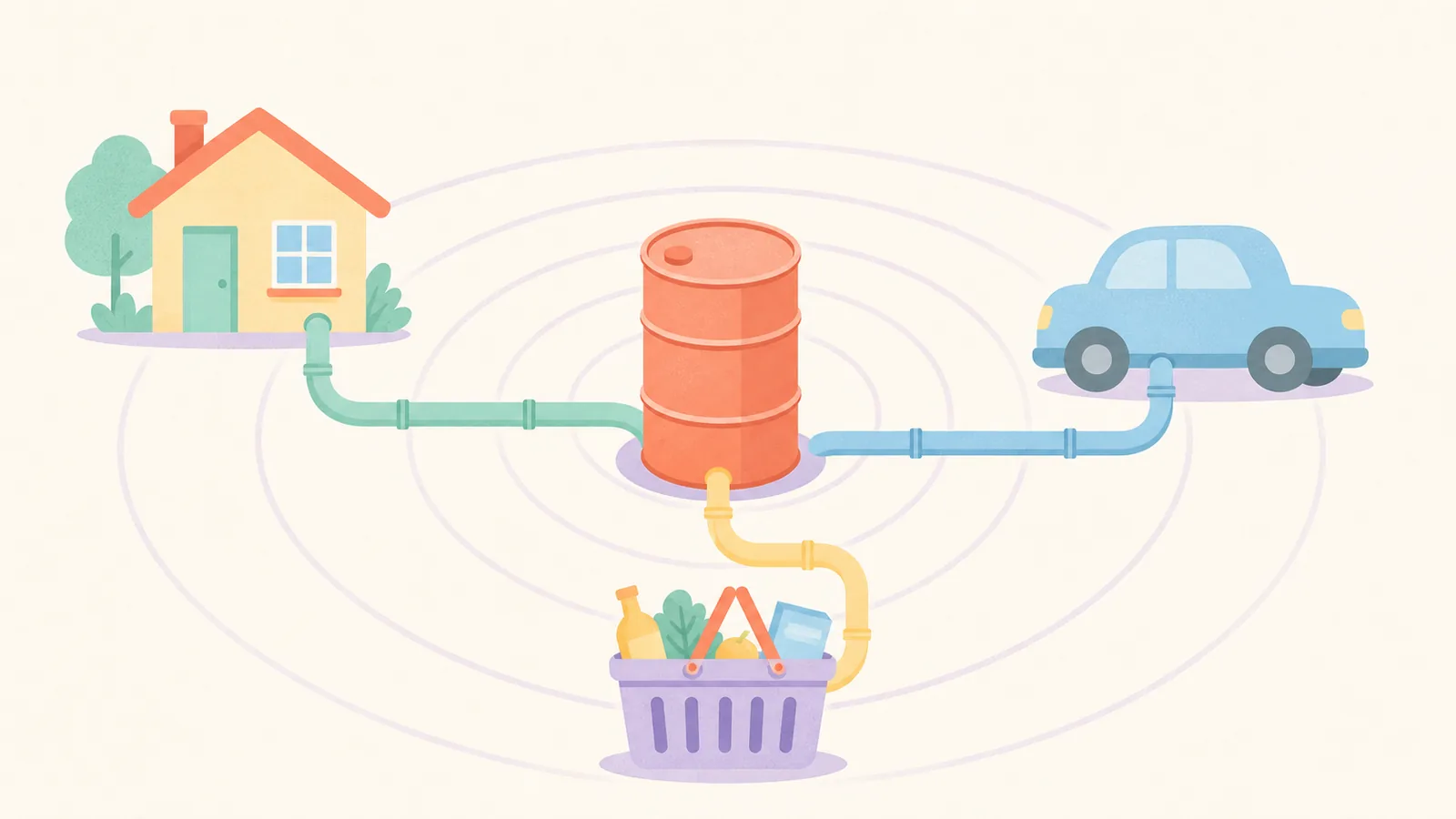
At $79.4 per barrel, Brent crude is up over 1% today and hovering near levels that matter deeply to the Indian economy. For a country that imports the vast majority of its oil, crude prices are not a distant commodity story — they’re a direct line to your fuel bill, your grocery prices, and your investments.
Why India Cares So Much About Crude
India imports over 85% of its crude oil requirements. That makes it one of the most oil-sensitive large economies in the world. Every dollar change in Brent alters India’s import bill by roughly $1.4 billion annually. When crude rises, three things happen in sequence:
- Fuel prices climb. Petrol, diesel, and LPG follow global prices, hitting every household budget.
- Inflation rises. Transportation costs feed into the price of everything — food, goods, services.
- The trade deficit widens and the rupee weakens. Paying more for oil means buying more dollars, which pressures the currency and, in turn, can pressure markets.
What’s Driving Oil at $79
Oil prices respond to a tug-of-war between supply and demand:
- OPEC+ production policy. Decisions to cut or raise output are the single biggest lever on prices.
- Global demand outlook. Strong growth in large economies supports demand; slowdowns crush it.
- Geopolitical risk. Conflicts in producing regions add a risk premium to every barrel.
- US inventories. Weekly US stock data moves short-term sentiment.
- The dollar. Since oil is priced in dollars, a weaker dollar makes crude cheaper for other buyers, supporting demand.
The climb to $79.4 reflects a mix of tighter supply expectations and resilient global demand.
How Oil Reaches Your Life
The transmission is quicker than most people assume. A sustained rise in crude shows up at the pump within weeks. It flows into transport costs, then into food prices — especially for items moved long distances — and finally into the RBI’s inflation calculations. When the RBI sees oil-driven inflation, it’s more cautious about cutting interest rates, which keeps borrowing costs higher for longer.
For investors, oil acts as a sector radar. Aviation, paints, logistics, and cement are oil-sensitive — their margins shrink when crude climbs. Conversely, energy and refining companies often benefit. If you own funds or stocks in these spaces, crude is part of your portfolio’s weather.
What You Should Do
- Budget for fuel volatility. Keep a buffer in your monthly budget for pump-price swings.
- Track crude, not just stock news. A sustained move in Brent tells you more about near-term inflation than most commentary.
- Keep your emergency fund liquid. Oil spikes often arrive with broader inflation, when life gets costlier all at once.
The MoneyExplain Takeaway
At $79.4, Brent crude is neither cheap nor alarming — but its direction matters. For India, oil is the price of everything, delivered through a single commodity. Understand how it moves, budget for its swings, and you’ll stop being surprised by the fuel bill, the grocery bill, and the market’s mood.
Full Net Real Return
Compounded Fee & Inflation Friction
Editorial Policy: MoneyExplain is an independent personal finance and macroeconomic publication. We do not offer investment advice, stock tips, or sell sponsored articles. Mutual Fund and equity investments are subject to market risks.