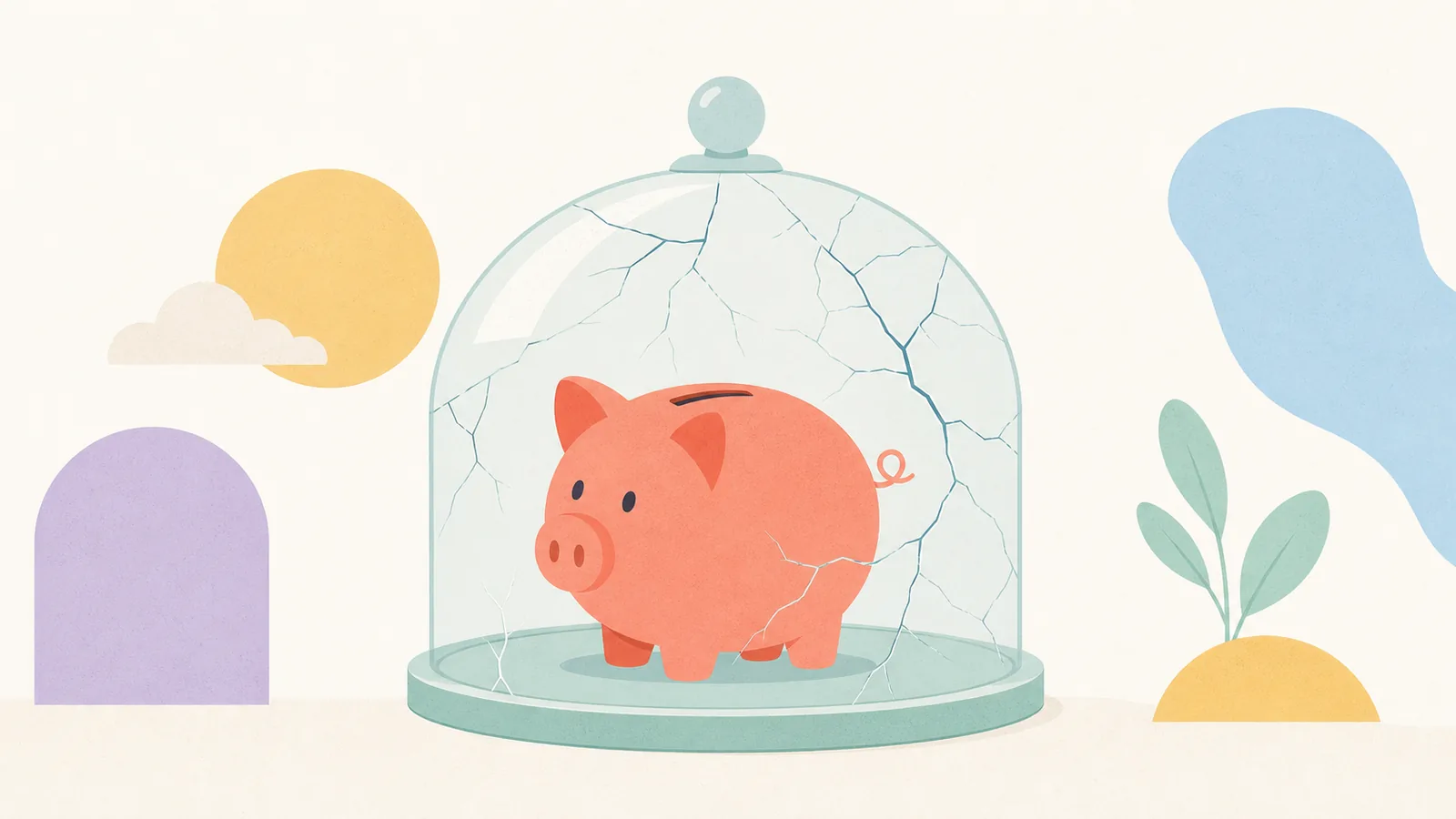
We’ve been conditioned since childhood to value ‘safety’ above all else when it comes to money. “Put it in an FD,” “invest in PPF,” “keep cash for emergencies” – these are the mantras passed down through generations. And for good reason, too. These instruments offer predictability and a nominal guarantee, a comforting blanket against the market’s unpredictable gyrations. But what if this very comfort is an illusion? What if the ‘safest’ choices you’re making today are, in fact, silently jeopardising your financial future?
Let’s get contrarian. In India’s current economic landscape, where global events like the US-Iran conflict continue to disrupt oil markets, driving up crude prices and consequently pushing up inflation, merely parking your money in traditionally ‘safe’ avenues isn’t just suboptimal – it’s actively risky.
The Allure of ‘Safety’ (and its Insidious Trap)
Every day, headlines scream about market volatility. Indian equities recently declined, with the Sensex falling 388 points and Nifty 112 points, as rising crude prices and a weaker rupee weighed heavily on sentiment. In such times, the inclination to retreat to the perceived security of fixed deposits (FDs), Public Provident Fund (PPF), or even plain old savings accounts becomes overwhelmingly strong. These offer capital protection and fixed interest, a haven from the chaos.
But here’s the rub: while these instruments protect your nominal capital (the number of rupees you put in), they do very little to protect your purchasing power. This is where the silent, insidious killer known as inflation enters the scene.
The Silent Killer: Inflation
Consider today’s headlines: gold prices are edging higher, nearing a two-month peak, precisely because investors are awaiting US inflation data for clues on Federal Reserve policy. Why? Because gold is often seen as a hedge against inflation. Now, turn your gaze to India. With crude prices elevated due to geopolitical risks (Iran’s surprising manoeuvre to shut down the Hormuz waterway is a case in point), and a weaker rupee making imports more expensive, inflation here is a very real, tangible threat to your savings.
Inflation is simply the rate at which the general level of prices for goods and services is rising, and consequently, the purchasing power of currency is falling. Imagine if your grandmother put away Rs 100 in an FD in the 1980s. That Rs 100 might have earned a decent interest rate, but today, what could it buy? A fraction of what it could back then. Your grandmother didn’t lose the Rs 100, but the value of that Rs 100 was severely eroded.
Real Returns vs. Nominal Returns: The Hard Truth
This brings us to a crucial distinction: nominal returns versus real returns.
- Nominal Return: This is the advertised interest rate on your FD or PPF, say 6% or 7%. It’s the number that looks good on paper.
- Real Return: This is what truly matters. It’s your nominal return minus the rate of inflation.
Let’s put this into perspective with practical, Indian numbers. If your bank FD offers a nominal return of 6.5% annually, but the prevailing retail inflation rate in India hovers around 6-7% (a figure not uncommon, especially when geopolitical risks keep essential commodities pricey), your real return is perilously close to zero, or even negative.
If inflation is 7% and your FD pays 6.5%, you are losing 0.5% of your purchasing power every year. Your money isn’t just sitting idle; it’s actively depreciating in value. That “safe” investment has, ironically, guaranteed a slow, steady erosion of your future wealth.
The True Risk: Opportunity Cost
Beyond the direct loss of purchasing power, there’s another, often overlooked, and arguably greater risk associated with over-reliance on ‘safe’ assets: opportunity cost. This is the value of the next best alternative that you forgo when making a choice.
While your ‘safe’ money was diligently (and perhaps slowly) growing at a 6-7% nominal rate, the Nifty50, despite its daily gyrations and recent dips (like the 112 points it shed yesterday amid global jitters), has historically delivered significantly higher returns over the long term. A consistent Systematic Investment Plan (SIP) in a diversified equity mutual fund or a Nifty50 index fund, for instance, would have typically outpaced inflation by a wide margin, turning small, regular investments into substantial wealth.
Consider the last decade’s returns. Even with market corrections, equities have generally provided inflation-beating returns. By shying away from growth assets out of fear, you’re missing out on the power of compounding, which, when applied over decades, is the single most potent force in wealth creation. The real risk wasn’t the market’s volatility; it was the opportunity lost by not participating in its growth.
Redefining ‘Safe’: A Balanced Perspective
This isn’t to say traditional ‘safe’ investments have no place. They absolutely do, but their role needs to be clear and defined.
- Emergency Fund: Your emergency fund, typically 3-6 months of living expenses, absolutely belongs in highly liquid, truly safe instruments like savings accounts, ultra-short-term debt funds, or even FDs that can be broken easily without penalty. The goal here is immediate access, not wealth creation.
- Short-term Goals (0-3 years): For goals like a down payment on a car next year, FDs or short-term debt funds are appropriate. Here, preserving capital is paramount.
- Long-term Wealth (3+ years): This is where your perspective on ‘safety’ needs a radical shift. For retirement, your child’s education, or building substantial wealth, ‘safe’ means preserving and growing your purchasing power. And that, my friends, often necessitates an allocation to growth assets like equities.
True financial safety isn’t about avoiding all risk; it’s about understanding which risks to take and which to mitigate. The risk of losing purchasing power to inflation is a pervasive, silent threat that many overlook in their quest for nominal security.
The MoneyExplain Takeaway
The illusion of safety in traditional instruments can be a comfortable but costly lie. As an Indian retail investor, your primary battle isn’t just against market volatility, but against the relentless march of inflation, especially in an era of geopolitical flux and commodity price shocks. Review your portfolio: are your ‘safe’ investments truly serving your long-term goals, or are they inadvertently setting you back? It’s time to embrace a more nuanced, analytical view of risk and redefine what ‘safe’ truly means for your financial future.
"Focus on real returns (post-inflation) rather than just nominal interest rates."
Traditional 'safe' investments like FDs and PPF may be losing real value due to inflation.
Editorial Policy: MoneyExplain is an independent personal finance and macroeconomic publication. We do not offer investment advice, stock tips, or sell sponsored articles. Mutual Fund and equity investments are subject to market risks.